Translate

Friday, November 15, 2013

 'සියවසේ ධූමකේතුව' දකින්න ශ‍්‍රී ලාංකික බාලදක්ෂයන්ට අවස්ථාවක්


මේ මස 17 වැනිදා සිට 23 වැනිදා දක්වා රාති‍්‍ර කාලයේ සහ අළුයම නැගෙනහිර අහසේ දී දැක බලා ගතහැකි අයිසොන් ධුමකේතුව නිරීක්ෂණය කළ හැකි බව ආතර් සී. ක්ලාක් මධ්‍යස්ථානයේ තාරකා විද්‍යාඥ මහාචාර්ය චන්දන ජයරත්න මහතා පවසයි. මෙම ශතවර්ෂයේ දිස්වන ප‍්‍රබලම ධූමකේතුවක් වන මෙම ධුමකේතුව, අයිසොන් ධුමකේතුව ලෙස නම් කර ඇති අතර මෙම ධූම කේතුව දැකබලාගැනීම සඳහා කොළඹ විශ්වවිද්‍යාල පරිශ‍්‍රයේදී සූදානම් කෙරෙන නිරීක්ෂණ කඳවුර සදහා බාලක්ෂයින්ට ද සහභාගී විය හැකියි. සීමිත ඉඩපහසුකම් ඇති බැවින් බාලදක්ෂයින් වෙනුවෙන් හැකි ඉක්මනින් ඔබේ ඉඩපහසුකම් වෙන්කරගන්න. ඒ සදහා ප‍්‍රමාණවත් දායකත්වයක් සැපයීමට කැමති නම් අපට ලියන්න.

ISON ධූම කේතුව ශතවර්ශයේ ධූමකේතුව විදිහටත් හඳුන්වනවා. 2012 ලෝක විනාශය ගැන කතාබහට ලක්වූ මෙම ධූමකේතුව 2012 සැප්තැම්බර් මාසයේදී රුසියානු තාරකා විද්‍යාඥයින් දෙදෙනෙකු විසින් සොයාලනු ලැබූවක්. නොස්ට්‍රාඩමුස්ගේ අනාවැකිය සඵල කරමින් මෙය ලෝක විනාශය සිදු කරයිද යන්න පිලිබඳ තවමත් විද්‍යාඥයින් විමසිලිමත් වෙනවා. හැතැප්ම 3ක් 4ක් අතරේ විශාලත්වයක් තියෙන ඒ කියන්නේ ඔස්ට්‍රේලියාව වගේ 1.2 ගුණයක් විශාගත්වයෙන් යුතු මේ ධූමකේතුව පලමු වරට සූර්යයා හා ගැටීමක් සිදුවන්නේ 2013 දී කියලයි කියන්නේ.


කොහොම වුනත් මේ ධුමකේතුව කිලෝමීටර මිලියන 1.2 පමණ සූර්යයා ආසන්නයෙන් යෑම පමණයි සිදුවෙන්නේ. මේ නිසා සාමාන්‍ය ප්‍රමාණයට වඩා වැඩි විශාගත්වයකින් යුතු වලිගයක් එහි දකින්න පුළුවන් වෙයි කියලත් විශ්වාස කරනවා. මේ ධූමකේතුව 2013 නොවැම්බර් මාසයේදී, හිරුගේ රශ්මියෙන් විනාශ නොවුනොත් අපට රාත්‍රී අහසේ දකින්නට ලැබිය හැකි බවත් දහවල් කාලයේදී අධික දීප්තිමත් තාරකාවක් මෙන් දිස්විය හැකි බවටත් අනාවැකි පලකරලා තියෙනවා.

The Comet ISON, said to be a very bright comet with a dazzling show, will have its closest point to the Sun (perihelion) on November 28. It will visible in Sri Lankan from November 17 to 23. A release said the public should look at the area of the sky close to the eastern horizon before the Sun rise around 5.00 a.m. to see the comet.

"For the best view, you need a very clear sky with no clouds or light pollution and should go to a hill top with no obstruction towards the eastern horizon. On November 17, the comet will be about 25 degrees above the eastern horizon at 5.00 a.m. While increasing the brightness, it will gradually come down daily with 21 degrees on November 19 and 11 degrees on November 23 at 5.00 a.m. above the eastern horizon," the release added.

"You will see the comet with the tail stretching away from the direction of the Sun. A pair of binoculars would give a much better view." Details are available at the Arthur C Clarke Institute for Modern Technologies(ACCIMT)
 

Dr. K. P. S. Chandana Jayaratne - B.Sc., Ph.D., Pg.Dip. Counselling, FIP (SL), MIPC Senior Lecturer in Physics. University of Colombo., Consultant on Astronomy and Space Science Arthur C Clarke Institute for Modern Technologies - Mob/SMS: 0714 800 800 / 0777 309 385 E-mail: chandana@phys.cmb.ac.lk

Friday, October 25, 2013

Teams in the Global Torch Race

You can click on the pins on the world map to see the current location of the Global Torch Race teams

Something new is happening this year…

This year, Scouts can participate in a Global Torch Race during JOTA-JOTI. The Global Torch Race is about creating the fastest-growing gathering of Scouts globally.

In the Global Torch Race, there are about 100 teams that compete to win the Race. Each team has a team leader, who has given his/her team a name. The task for the team leader is to kickstart the Global Torch Race. Hence, it will be the task of the team leader to be the first person in the team to invite and recruit other Scouts to join this team.

If you have not joined a team yet, you can do this here by picking one from the list. You can only become a member of one team. Every team has its own team page, where you can see and connect with your team members.

Once you have joined a team, you cannot unjoin it

The task of the team

Each Global Torch Race team needs to recruit Scouts from as many countries as possible during the 48 hours of JOTA-JOTI. Everyone in a team can invite other Scouts to join. So call your Scout friends, find them on your social media networks and invite them to join your team.

The winning team is the one who spreads their Torch to most countries.

The winners will be announced after the JOTA-JOTI event and will receive a special prize for their global effort.

Join a team now and help us make history.

Our team team has reached 100 countries, 161 members "Scouts & Guides JOTA-JOTI" http://www.scout.org/node/10539..Thank you for being with us...!!


The results from the Global Torch Race are here. And the winner is.....Scouts & Guides JOTA-JOTI!!! A huge congratulations. You guys have reached 100 countries....

Thank you Global Torch Race, for giving us a chance to spread Scout.org to the world scouts. "Scouts & Guides JOTA JOTI" team Members..
https://www.facebook.com/photo.php?fbid=473615932756667&set=pcb.473616282756632&type=1&theater

Saturday, October 12, 2013


October 19 at 8:00am at 11:00am
Archbishop college, Nayakakanda, Wattala.
ලෝක බාලදක්‍ෂ සංගමය විසින් සංවිධානය කරනු ලබන ජාත්‍යන්තර 56 වෙනි ගුවන් හා 17 වෙනි අන්තර්ජාල ජම්බෝරිය ශී‍්‍ර ලංකා ආධුනික ගුවන් විදුලි සංගමයේ පූර්ණ සහයෝගය ඇතිව රට පුරා ගුවන් විදුලි උප සම්ප්‍රේෂණ මධ්‍යස්ථාන 10ක් ඔස්සේ විසුරුවා හරිනු ලැබේ.

මෙවර 2013 වර්ෂයේ ඔක්තෝම්බර් මස 19 දවස පුරා ශ්‍රී ලංකා බාලදක්ෂ සංගමයේ ප‍්‍රධාන මෙහෙයුම් මධ්‍යස්ථානය වත්තල නායකකන්ද අගරදගුරු විද්‍යාලයේදී පැවැත්වෙන වත්තල ජා ඇල 2013 වත්ජාරී දිසා කදවුරට සමගාමී ව සජීවී ලෙස කි‍්‍රයාත්මක කෙරේ.

බාලදක්ෂ මාධය සහකරු වශයෙන් SCOUTING MAGAZINE සහ විජය බාලදක්ෂ කදවුර, විජායි දමිල මාධ්‍ය බාලදක්ෂ කදවුර හා එක් ව මෙවර කටයුතු කරනු ලැබේ. සජීවී වැඩසටහන් විසුරුවා හැරෙන ගුවන් විදුලි සම්ප්‍රේෂණ මධ්‍යස්ථාන වලට සහභාගීවීමේ අවස්ථාව ඔබටත් උදා වී ඇත. මේ සඳහා බාලදක්ෂ නිල ඇඳුමින් සහභාගී විය යුතුය. මෙම වැඩසටහන සාර්ථක කරගැනීම සදහා ඔබ සැමට ආරාධනා කරමු.

සහභාගී වන සැමට ජාත්‍යන්තර මට්ටෙම් සහභාගීත්ව සහතිකයක් හිමිවන අතර සහතික පත‍්‍ර සීමිත බැවින් හැකි ඉක්මනින් ඔබගේ සම්පේ‍්‍රෂණ මධ්‍යස්ථානය 'ජාතික බාලදක්ෂ මූලස්ථානයේ' ලියාපදිංචි කරගතයුතු බව කාරුණිකව සලකන්න.
GET READY TO PARTICIPATE IN JOTA-JOTI BETWEEN 19-20 OCTOBER 2013!
56th Jamboree On The Air / 17th Jamboree On The Internet

"Lets Share"

Jamboree On The Air (JOTA) and Jamboree On The Internet (JOTI) is an annual virtual global camp in which around 500,000 Scouts and Guides from all over the world make contact with each other by means of amateur radio and the internet. This year's JOTA-JOTI includes a special broadcast by Sri Lanka Scout Association Official Operating Main Hub @ Archbishop college, Nayakakanda, Wattala. JOTA/ JOTI Camp Chief, Archt. Prof. T.K. Nimal P De Silva, address will be broadcast on the radio or played to groups of Scouts and Guides at 8.00 a.m. local time on Saturday 19 October 2013 Wattajaree District camp.

Through JOTA-JOTI every Member of Sri lankan Scouts can make friends, exchange stories, experience different cultures and have fun as part of the largest activity in world Scouting. JOTA-JOTI also gives Youth Members an awareness that they belong to a worldwide Movement.

You don't need any technical knowledge to join in - just ask the right people to help you. Anyone with an average knowledge of computers can help you organise and run JOTI - all you need is a computer that's connected to the internet. To participate in JOTA you must have a licensed Amateur Radio Operator to assist you. There are no registration or fees required for your Group to participate, however we are required to prepare Branch and National reports on the event, and some form of registration of your participation will assist greatly. More on this later.
7th Watjaree - 2013 
 October 17 at 8:00am until October 20 at 11:00am
Archbishop college, Nayakakanda, Wattala.
wattala, Ja-ela Annual District Scout Rally on 2013 October 17-20

couple with International 56th JOTA~17th JOTI~5thJOTS~2013 https://www.facebook.com/events/514015578690287/

බාලදක්ෂ මාධය සහකරු වශයෙන් SCOUTING MAGAZINE සහ විජය බාලදක්ෂ කදවුර, විජායි දමිල මාධ්‍ය බාලදක්ෂ කදවුර හා එක් ව මෙවර කටයුතු කරනු ලැබේ. මෙම වැඩසටහන සාර්ථක කරගැනීම සදහා ඔබ සැමට ආරාධනා කරමු.

ජාත්‍යන්තර 56 වෙනි ගුවන් හා 17 වෙනි අන්තර්ජාල ජම්බෝරියට සහභාගීවීමේ අවස්ථාව ඔබටත් උදා වී ඇත. 2013 වර්ෂයේ ඔක්තෝම්බර් මස 19 දවස පුරා ශ්‍රී ලංකා බාලදක්ෂ සංගමයේ ප‍්‍රධාන මෙහෙයුම් මධ්‍යස්ථානය වත්තල නායකකන්ද අගරදගුරු විද්‍යාලයේදී පැවැත්වෙන වත්තල ජා ඇල 2013 වත්ජාරී දිසා කදවුරට සමගාමී ව සජීවී ලෙස කි‍්‍රයාත්මක කෙරේ. මේ සඳහා බාලදක්ෂ නිල ඇඳුමින් සහභාගී විය යුතුය.  


Wednesday, September 25, 2013


World Day of Prayer & Action for Childrens & Elders
 Organized by Deshabandu Nimal Bulathsinhala (MJF, Jp, PS, MMC)
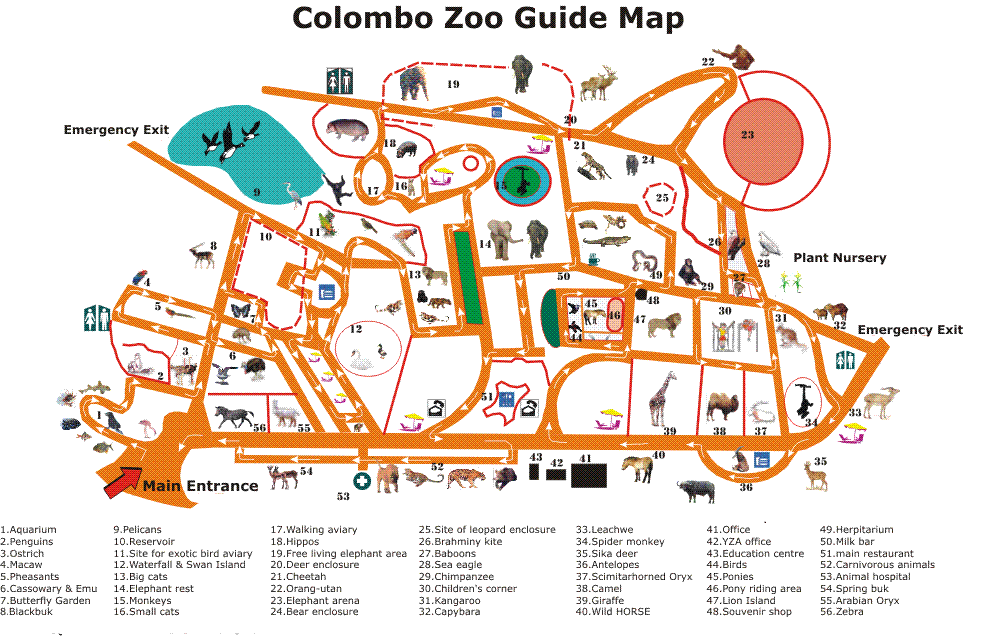
The Sri Lanka Queen's & President's Scout Guild, Lions Club of Udahamulla in Lions District 306C-2 in association with the Dehiwala-Mat.Lavinia Municipal Council and the Dehiwala Zoo celebrated the International Children’s Day at S.de S. Jayasinghe Grounds, Dehiwala.

Over 5,000 children participated at the event which took a carnival atmosphere. The day’s program included a variety of games and competitions.

A special feature of the event was that the little ones were taken to the Dehiwala Zoo. The children were treated to refreshments and prizes were offered to the winners of the many competitions.

past District Governor, 306C-2, Lion Nimal Bulathsinghala took an actinal part which made the event a colourful and memorable one for the children.

Get free tickets for Dehiwala Zoo


Tuesday, September 10, 2013


Are you looking to buy a

'SCOUTING MAGAZINE'

Colombo International Book Fair 2013 on September 14-22 at BMICH Sri Lanka

Sri Lanka’s largest book Exhibition , Colombo International Book Fair will be held at the Bandaranaike Memorial International Conference Hall (BMICH) from the 14th to the 22th of September 2013.
Here is a great chance forCub Scouts, Girls in Scouts, Junior & Senior Scouts, Rover Scouts, Sea Scouts, Air Scouts, Equestrian Scouts, Little Friends, Guides, Senior Girl Guides, Akelas and Adult leaders to buy scouting Magazines at The Colombo international Book fair 2013, will be held from 14th September to 22th September 2013 at 9.00 am to 9.00 pm.


now available on
Hall - F 'EXPOGRAPHIC BOOKS LTD.'
Hall - A 72, 77, 78 Pitrban Book Shop


Sunday, June 30, 2013

Traditional Fire starting : How to Make Fire with Flint and Steel

There is something magical about making fire from materials other than the standard Bic lighter or Ohio Blue-Tips. Moreover, it is often a better method than matches.
Using flint and steel is one of the easiest of the match-free fire-making methods. Here’s how it’s done:

The Flint

Flint isn’t really a single rock, it’s more like a loose family of rocks at about eight or so on the Mohs scale of hardness. Cherts and flints are multi-colored, depending on their chemical content and vary in hardness.
I use Niagara chert because it’s easy to find in my area – several unglaciated areas have chert deposits that are easy to harvest. The ideal flint for striking a spark has a sharp, acute edge that will take a bite out of the steel.  The flint sometimes needs to be “dressed,” or knapped with a hammer or other flint to get that proper edge. A round cobble of flint will not work until it is properly edged.
It is a common misconception that the flint particles make the spark. This is due to the average person seeing the little dark flint in a disposable lighter, and the steel wheel that does not wear, while the flint does. This is not true flint but a compound of cerium and iron that burns when scratched.
The true flint itself does not spark. Rather, the high pressure exerted on the steel causes a small curl of steel to peel off and ignite. To understand why the steel ignites, bend a coat hanger over and over again in one spot. Soon it will be so hot you cannot touch it.  That energy warms the metal. Now imagine putting all the force of your downward stroke into a microscopic flake of metal. Of course it burns!

The Steel

A good steel is made of a high-carbon tool steel. My favorite is W1, a water-quenched tool steel that I quench in oil to get it to the proper hardness. When oil-quenched, it is hard enough to resist the pressure of the flint, except for the small piece that ignites. A properly treated steel should give off thousands of sparks, if not millions, before being lost. You will certainly not wear one out. If the steel becomes too hot, it must be re-tempered before it can be used again.
The shape of the steel is a personal preference. C-steels, which are roughly the shape of a letter “C,” are most common.
U-steels are often used by folks with larger hands who can’t get them comfortably in a C-steel. They are both used in the same manner.

The Char Cloth

You can make sparks all day without causing so much as a wisp of smoke if you are not giving your sparks a happy and fruitful ground upon which to light. The best material for such fire-starting is char cloth, which is simply linen or cotton cloth that has been burned in a low-oxygen environment (like the small tin in the above illustration). A small hole poked in the top allows smoke and pressure to escape without the oxygen burning the cloth completely.
To make char cloth, pack a small airtight tin with linen or cotton patches about 2 inches square. Place the tin on some hot coals in a fireplace or campfire and let it cook for at least 20 minutes, or until the smoke subsides from the hole you poked in the top. Let it cool completely, and don’t open it for several hours or even overnight – the cloth will catch flame and burn to a cinder.
Once you have char cloth, you need…

Tinder


Everyone knows what tinder is. It’s anything that burns if a spark lands on it – dryer lint, dry grass, whatever. Finding dry tinder is another article unto itself, and there are lots of places to do so, but success depends so much on what terrain you’re in that it’s not worth talking about here. What is worth talking about is a lightweight, portable substitute: oakum.
Oakum is made from jute fibers, the same stuff gunnysacks are made of. It is normally pounded into the seams of a wooden boat as sort of a primitive caulking. A little bit of oakum is easily fluffed into a small nest, which can accept your char cloth once it carries a spark. It’s available on-line in many places; a pound will cost you about $7.00 and will last years.

Technique

It’s pretty simple, actually. First, make sure your tinder is prepared and ready to accept your char cloth. Make a nest as shown, and put it where you can reach it easily. Your fire bed should be already prepared with kindling and fuel and ready to accept your burning tinder.
Now place a small piece of char cloth on the top of the flint as shown. The goal is to shave off a very small strip of metal that will burn and land on the char cloth. Striking down at about a 30-degree angle should create a spark or two, which will cause the cloth to glow red where they land. This often happens on the edge of the cloth and is hard to see in bright sunlight. If a spark lands on the char cloth, wait and blow gently on it until you see either a glowing crescent or nothing. If nothing, go back to striking.
If you do have a glowing piece of char cloth, great! Fold it onto itself and blow gently to encourage the spark to spread. Here’s the wonderful thing about starting a fire this way – the best time to do it is in the wind, where matches are blown out quickly. In fact, the stronger the wind, the faster your char will be consumed. Place the glowing char into the prepared tinder nest and carefully fold it in on itself. Remember, you still need oxygen in there.
Blowing gently will cause you to see wisps of smoke coming from the bundle. Perfect. Just keep blowing, and pretty soon – POOF! You’ll be ready to start a fire.
With practice, you will be able to start fires consistently and often faster than with conventional methods, especially in adverse conditions. If you have any questions, feel free to comment, and I’ll answer as best I can.

by A Manly Guest Contributor
Editor’s note: This is a guest post from Darren Bush. 

Traditional Firestarting : Fire from Friction

Today we continue our discussion of traditional firestarting with a primer on making fire from friction. Last time we talked about using flint and steel which is a really cool method and actually useful in real life situations.  Fire by friction is more temperamental and requires more technique and more patience.  It is a useful survival technique, but I don’t go out of my way to make fires this way on purpose.  On the other hand, I use my steel quite often.
If you want to understand how fire by friction works, consider the time you slid down the slide at the playground and realized you were going way too fast. You tried to slow yourself down by grabbing the sides of the slide, but your hands soon became too hot to hold on. If you never had this experience, think about how warm your hands get sliding down the rope in the gym. Hot stuff, right?
Imagine concentrating all that energy into a small space. Properly concentrated, a little bit of friction can create a fire very quickly. The trick is patience, patience, and then more patience. “You can’t hurry love,” said Diana Ross. “You just have to wait. Love won’t come easy; it’s a game of give and take.” So is fire by friction. You can’t hurry fire.

The Theory

To create a fire you need heat, fuel, and oxygen. The heat is supplied by friction between the spindle and the hearth board. The fuel is supplied by the hearth board eroding and creating punk: fine, dark brown powdery stuff. The oxygen is provided by Mother Nature. Simple as that.

The Equipment

The hard part is choosing the right materials for a spindle, a hearth board, and a bow. Hearth boards are best made of a softer wood like cedar. I use old shakes; they work great. I have also used cottonwood and willow in a pinch, but nothing smells as good as cedar when you’re starting a fire. Some like catalpa wood.
Spindles should be long, straight pieces of wood. In the west, folks often use mule fat (the bush, not the equine lipid). Horsetail works well too. I find that a good cedar or fir spindle works great. It should be about 9 or 10 inches long and the same thickness, about ¾ to 1 inch, throughout the length of the spindle. If the thickness varies, the string will crawl toward the narrow part of the spindle.
The bow should be a flexible piece of wood with enough spring to maintain tension on a piece of rope. I use willow limbs, but you can use a number of things.
The socket (the top part of the whole equation) should be a harder wood like walnut or oak and should be comfortable to hold. I have used elm or ash; my current socket is half a piece of ash. Osage orange is wonderful and is good for a bow as well if you can get a nice piece bent in the right place.

The Technique

First, grease the top of your spindle. I rub it in (what’s left of) my hair, behind my ears, along my nose, anywhere there are skin oils. If you have some fat, soap or grease, a little dab will do. That means the spindle will NOT have friction on the top but will on the bottom, where it meets the hearth board.
There is a definite technique for holding the bow and drill successfully. For right-handed people, use the directions that follow. For left-handed people, reverse everything. Place your left foot on the left side of the hearth board and the indentations on the right. The cord should twist around the spindle once, and position the bow and spindle so that the business end of the spindle is facing down, the arc of the bow to the right (away from your knee). Hold the socket in your left hand and steady your left wrist against your left lower leg. Move your right foot back from the hearth board a bit, and place the lower end of the spindle in the hearth board where you want an indentation.
Now you’re ready to make an indentation. Pick a spot where the diameter of the spindle lines up with the edge of the hearth board. Then, rotate the spindle slowly and wear away a little dimple, and you’ll see some smoke. When you wear away a large enough dent to hold the spindle easily in the depression, stop and use your knife to cut away a small notch, almost to the center of the spindle dent. This allows the punk dust to fall out of the hole, but it also provides an edge where heat can really build up and eventually cause the punk to ignite. Place a leaf or other small flat object under the notch to catch the fruits of your work.
The trick is slow, methodical, rhythmic movements. Don’t push down super hard, don’t go super fast, just nice and easy does it. You will see punk start to pour out of the notch and land on the leaf or piece of bark collecting the punk dust. Smoke will waft up and smell really good. When you see a good amount of smoke, stop and look at the punk. If it continues to smoke, congratulations! You have a coal in your punk! Now place the coal in your prepared tinder bundle, and blow gently until the coal catches the tinder and bursts into a happy flame.

The Hand Drill

The hand drill is nothing new, but it’s much harder. The thumb loops are a modification by wonderful artist/primitive skills advocate Dino Labiste. The concept is identical, except you need to use your thumbs to apply downward pressure. The spindle is not consumable, so small pieces of wood are carved into “bits” you place in the spindle. Same rules apply–slow, methodical and rhythmic movements, no speed demons or anything like that. Patience wins.
For more information about primitive fire by friction, If you’re interested, you can purchase fire-by-friction materials there. It’s a blast. I especially enjoy the contest to build the smallest fire-by-friction set.

by A Manly Guest Contributor
Editor’s note: This is a guest post from Darren Bush.

_____________________________________________________________
Darren Bush is the owner and Chief Paddling Evangelist of Rutabaga, but he’s also an amateur blacksmith, longbow shooter, and primitive skill aficionado. He believes primitive skills are highly undervalued in modern society.

Thursday, May 16, 2013

How to be a Scout in Sri Lanka?

How to be a Scout in Sri Lanka?


I got the opportunity to do an exclusive interview with the programme commissioner for the National Scout Headquarters of Sri Lanka - Mr. Rohan Wirasekara. He is also the Scout Leader for the Royal College, Colombo Scout Group for three decades. It is a large Scout Group with about 1,000 Cubs & Scouts.

Question - Why do you think a student should be a Scout?

Answer - Because Scouting trains the students to be fit citizens with values. Boys need to try fun and adventurous things. In Scouting students always try new things on their own. They are capable of doing many things. They handle duties, obey the orders, manage teams, meeting new friends, provide service to others and do have a lot of adventures .

Through those activities they build self confidence, leadership skills and become a cheerful and a capable persons. Most of the people who has done Scouting are well established in the society today.

Question – What difference you see in doing a sport and doing Scouting ?

Answer – I’ll give you an example. Say a student is playing cricket. He is trained full time for a single target. He is trained to face the balls, bowling techniques, batting techniques and finally by hook or crook to win the match for the school.

But in Scouting, Scouts can involve in any sport or activity for a different purpose. That is to be a good and fit citizen, with a strong personality.. A good Scout Leader can use any sport or activity to achieve this goal. In scouting, a student gets to do many things in life rather than a single sport. It has a higher target with higher values.

Question – How to become a Scout in Sri Lanka?

Answer – You can join your school’s Scout Group. But it will depend on your age. You will have to join the category which you belong to. Then you can meet the relevant Scout Leader/ Scout Leader of the school and request him/her to enroll you.

  • Age 7 – 11 ------Cub Scout
  • Age 11 – 18 -----Scout
  • Age 18 – 24 -----Rover Scout
If there is no Scout Group established in your school, then you could request the Principal of the school to take necessary steps to start a Scout Group.


If the District Commissioner is not reachable or if there is no way to contact him, the Principal can then directly contact National Scout Headquarters.

http://www.srilankascouts.lk/

Question – What are the initial requirements to start a Scout Group in a school?
 

1. Principal’s permission.

2. There has to be a Responsible Authority to take care of the Scout Group. It is called the “Sponsoring Authority”. In most cases it is the relevant school that act as the Sponsoring Authority for the Scout Group. For example, Royal College is the Sponsoring Authority for the Royal College Scout Group. Certain Scout Groups have Sponsors such as temples, churches, Rotary club, etc. Bellanwila temple is also sponsoring a Scout Group.

3. School should get a trained Scout leader (District commissioners can arrange this), or arrange one of the teachers or a nominee of the Principal to follow a Phase 1 Scout Leader Training course. Of course the Scout Group has to be registered with the Scout H.Q.

Only thing is when practicing Scouting, children will require uniforms, shoes, tents, flags etc.

But you know, a talented and willing Scout Leader can overcome all these hurdles. Uniforms are not a must always. While we encourage all Scouts to be properly & smartly dressed in the correct uniform, there are many Scouts specially in remote areas who would use their School uniform, that is a white shirt and a pair of blue shorts. They would pin the badges on this shirt. But they all have a Scarf, or a neckerchief to indicate their Scout Group.

Most expensive item would be the tents. A tent which can accommodate 6-7 boys cost around Rs 10,000 to 15,000. But that’s also not a preventing factor. Recently I saw a school which came to a camp used one of the sails of a sail boat prepared as a tent. So with creativity and innovativeness, you can overcome all those.

Other than for that there is a job week which is now called the “Service & Relationship” week, annually. A week dedicated for community service and to raise funds. The idea is to do a job for someone in the area and earn some money for it. The money raised is used for the Scout Group’s expenses.

 
Well… almost anyone can be a Scout Leader. Usually the teachers and Rover Scouts become trainers by obtaining the Scout Leader training.

There are 5 phases of the training for Scout Leaders.

  • Phase 1 ---District level training
  • Phase 2 ---District level training
  • Phase 3 --- In service training (that means very basically ,running a Scout Group) – There will be a
    Supervisor from the headquarters to track his progress.
  • Phase 4 ---National level training
  • Phase 5 ----In service training (wood badge)
Currently there’s a massive shortage of good quality Scout Leaders, because this is purely a voluntary service. It’s more financially beneficial for the teachers to do a tuition class during that time and earn some money. But Scouting will give a the Scout Leader a greater satisfaction. Therefore those who love children and have time to spend on them and those who love service oriented work can request to attend these trainings provided if they willing to run a Scout Group.

Question – For the information of any interested party, can you briefly explain what are the activities that Scouts do?

(He showed me the “Scout Progress Card” and the syllabus). All the requirements needed to acquire each badge and award are mentioned in this progress card. Few interesting areas and activities that Scouts learn about and practice are:


1. Scouting promise & Law

2. Signs and salutes

3. Maintain a log book

4. Knots important to know in life

5. First Aid & personal health

6. Community service

7. Camping

8. Hikes

9. Use of compass & map reading

10. Handling axe, knife, saw & mallet

11. Wood craft signs

12. Exercises

13. Sports

14. Cooking/ Also cooking without utensils

15. Fire lighting

16. Swimming

17. Marching

18. Getting to know the roads/area around

19. Hobbies

20. Handle/manage teams (Patrols and Troops)

Refer the following link to obtain information on badges and awards in scouting:

Question – How many camps per year a particular Scout Group would have? What are the constraints?

The biggest cost involved in an outstation camp is the transport cost. If it is held in school, the main cost would be for the food.. Scouts find money for their Scout Group through the Service & Relationship week each year. They go to houses and work places and help their owners with small work they can do. People give them work and then give some amount of money for their effort.

It’s like this. Scout Districts are different from administrative districts. There are approx 35 Scout Districts and nearly 35,000 Scouts in Sri Lanka. By 2013 we are planning to expand the Scout numbers to 100,000. The World Scout Bureau is helping us in this regard.

If Scouts have any issues , comments, ideas etc. with regard to the present syllabus or programmme or anything else relating to Scouting please contact me. We want to know your ideas. You can send a letter to Scout headquarters addressing to the


Programme Commissioner,
Sri Lanka Scout Association,
65/9 sir Chittampalam A. Gardinar Mawatha
Colombo 2.

You can also contact NHQ. phone 0115840687 or 0112433131

 
Posted by Nishadee 
Editior's note - My heartiest thanks goes to Mr. Rohan Wirasekara for sharing this information.